
Back in 2012 I wrote that the so-called “War on Drugs” was failing.
At the time, that view was often dismissed as radical. Yet fourteen years later, much of the debate has moved on. In 2026, a cross-party Oireachtas Committee on Drugs Use recommended that possession of drugs for personal use should be decriminalised and that Ireland should adopt a genuinely health-led approach to drug use. The committee’s recommendations build on the work of the Citizens’ Assembly on Drugs Use and years of evidence from Ireland and abroad. (The Irish Sun)
It is important to be clear about what decriminalisation means. It is not the same as legalisation. Drug trafficking would remain illegal. The manufacture and supply of drugs would remain illegal. What changes is how the State responds to someone found in possession of drugs for their own use. Instead of a criminal conviction, the emphasis shifts towards healthcare, support, treatment, and harm reduction. (The Irish Sun)
For decades, the dominant response has been criminalisation. Yet drugs remain widely available. Organised crime continues to profit. People struggling with addiction often face stigma, criminal records, barriers to housing and employment, and fear of seeking help. The question increasingly being asked is simple: if the current approach were working, would we still be facing the same problems?
The Oireachtas committee concluded that criminalising people for their own drug use has not reduced harm and that a different approach is overdue. Its recommendations include expanding treatment services, harm-reduction measures, overdose prevention, and community supports, recognising that addiction is fundamentally a health and social issue rather than simply a criminal justice matter. (The Irish Sun)
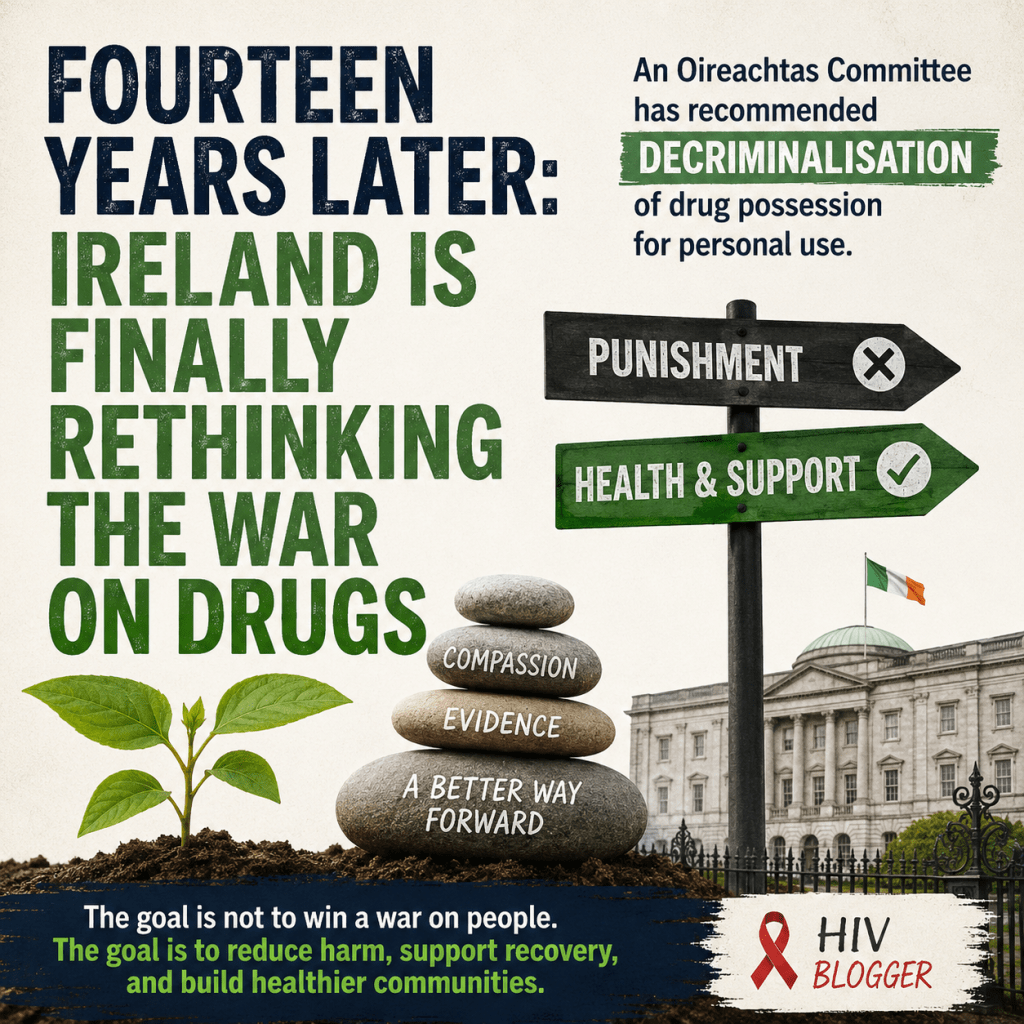
As someone living with HIV, I am also conscious of the lessons learned from other public health challenges. Shame and stigma rarely improve outcomes. They tend to drive people away from the very services that can help them. Compassion, evidence, and practical support generally achieve far more than punishment.
Reasonable people can disagree about the details of implementation. There are legitimate questions about resources, treatment capacity, public drug use, and the protection of communities. But Ireland has now reached a point where the conversation is no longer whether the status quo is ideal. The question is whether continuing to criminalise people for personal drug use achieves anything worthwhile.
Increasingly, the answer from public health experts, the Citizens’ Assembly, and now the Oireachtas Committee appears to be no. The goal should not be to win a war on people. The goal should be to reduce harm, support recovery, and build healthier communities.
 HIVBlogger