Why exercise has become one of the most important tools in living well with kidney failure.
It’s Saturday, and my husband Andrew—who has just passed his personal trainer practical exams (celebrations are definitely in order!)—decided to put his new skills to the test and put me through my paces.
He started me on a balance warm-up: walking forward and backward as if on a tightrope. Then came the walking lunges. Andrew admitted he wasn’t sure I’d be able to manage them. What he forgot is that I have a secret weapon: I’m Anglo-Catholic. As it turns out, a lifetime of genuflecting in church is the ultimate preparation for leg day! I absolutely crushed the lunges, moved on to wall and incline push-ups, powered through 3 sets of assisted squats, and finished with bicep curls using an empty barbell.
We used a 2010 tempo (2 seconds down, no pause, 1 second up, no pause) to keep the muscles under constant tension. Andrew might still be awaiting his official final paperwork, but I can personally attest that his coaching is already top-tier.
While it was a fantastic Saturday session, it’s also part of a much bigger narrative. I have been on dialysis since 2018. In this chapter of my health journey, fitness isn’t a luxury—it is a lifeline.
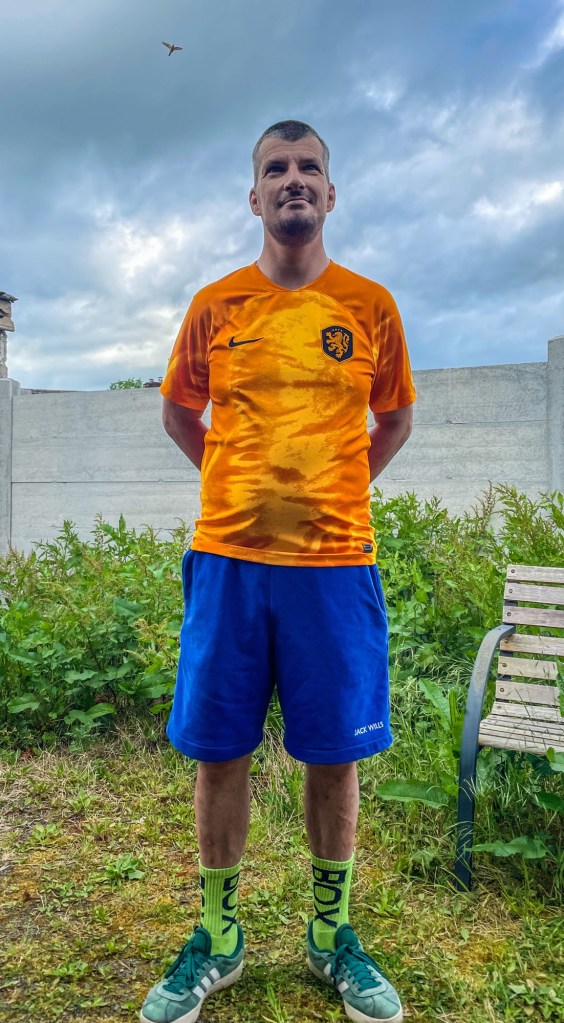
The Reality of Dialysis: Why Muscle is My Medicine
Living with HIV is a part of my story, but being on long-term dialysis since 2018 introduces the real day-to-day physical challenges. Dialysis is life-saving, but it takes a massive toll on energy, strength, and the body as a whole.
Here is why a Saturday workout like the one Andrew gave me is so vital for someone in my shoes:
- Combating Dialysis-Related Muscle Loss: Long-term dialysis can naturally cause the body to lose lean muscle tissue over time. Strength training—like today’s squats and push-ups—is the single best way to signal to my body that it must hold onto and build that vital muscle.
- Protecting the Heart: Cardiovascular health is the number one priority for anyone on dialysis, as the treatments put extra stress on the heart and blood vessels. By doing controlled resistance training, I am supporting my circulation and keeping my heart strong.
- Fighting Dialysis Fatigue: Dialysis fatigue is incredibly real. It sounds counterintuitive to work out when you’re tired, but building physical stamina through exercise actually gives me more resilience and helps me bounce back faster after a dialysis session.
- Maintaining Independence and Balance: That tightrope warm-up and those lunges aren’t just for show. Keeping up my balance and lower-body strength ensures I stay steady on my feet and fully independent.
Starting Exactly Where You Are
The beauty of fitness—as Andrew reminded me today—is that it is entirely scalable. You don’t need to lift the heaviest weights in the gym; you just need to challenge your body safely.
We started with wall-assisted push-ups before stepping up to inclined ones. We used an empty bar for curls to master the form. And we used my “genuflection” muscle memory to conquer those lunges.
Being on dialysis since 2018 means my weeks are structured around a machine. Three times a week, I sit in a dialysis chair while litres of fluid are removed and my blood is cleaned. Some days I leave feeling strong. Some days I leave feeling utterly spent.
Yet today reminded me that my story is not defined solely by what I cannot do. My body may be chronically ill, but it is not passive. It can still learn. It can still adapt. It can still become stronger.
Every lunge, every squat, every push-up is a small act of defiance against the assumption that illness must always have the final word.
And if a lifetime of Anglo-Catholic genuflecting turns out to be useful gym preparation, then perhaps God has a sense of humour after all.
Huge congratulations to Andrew on passing his practical assessments. I may be biased, but I think his future clients will be in very good hands.
How are you moving your body this weekend? Whether it’s a walk, a structured session, or a bit of church-inspired functional fitness—every single rep counts.
 HIVBlogger